How to Choose the Best React UI Framework for Your Project
How to Choose the Best React UI Framework for Your Project

Suraj Vishwakarma
Updated
Originally Published
Navigation Map
Originally published at surajon.dev
Introduction
Building a project from scratch can be time-consuming and frustrating. As developers, we often spend more time positioning components than improving functionality. Rewriting code that already exists wastes valuable time and effort. UI frameworks provide pre-built components, consistency, and efficiency, allowing you to focus on building features instead of reinventing the wheel. Using a UI framework will provide design consistency. UI frameworks also work well with AI coding tools, as pre-built components are easier to reuse than generating UI from scratch.
In this guide, we’ll explore 4 of the best UI frameworks for developing your next ReactJS project.
How to Choose
There can be various factors that can affect which framework/library might be helpful for your use case. To decide which library here are the factors to consider:
- Building: First, decide what the pages are, how they should look, and what components might be required. For example, Ant Design can be good for building a dashboard with heavy data loads like tables, forms, and other components.
- Level of Customization: Are you going to customize everything or just use the color scheme over the component? This will help choosing framework that offers more customization, such as shadcn/ui.
- Learning Curve: If you are already familiar with one UI framework, then it will be helpful to use that. Also, if you are going to use a different framework, consider the learning curve.
- Integration of Tailwind CSS: If you use Tailwind CSS, then it might be convenient to pick a library like shadcn/ui that uses it.
- Community and Support: No framework is perfect. It will have edge case issues. So, if there is a good community and support, then it will be helpful to resolve those issues.
These are some of the factors that you should consider while choosing a UI framework.
Shadcn/ui
A set of beautifully designed components that you can customize, extend, and build on. Start here then make it your own. Open Source. Open Code.
Github Stars: ~110K
Bundle Size: ~100KB
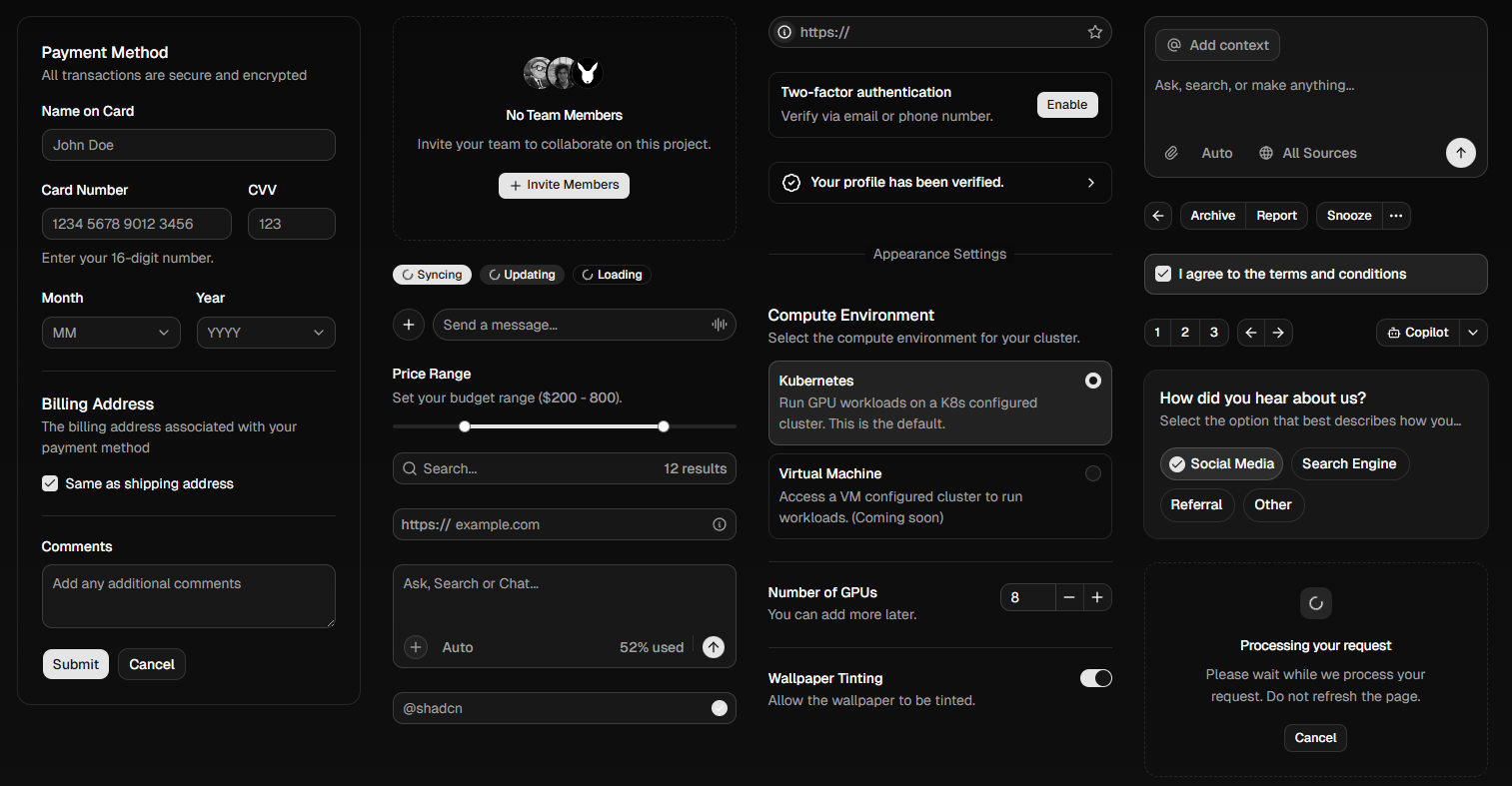
My go-to library to build a component today. I feel like shadcn/ui just goes well with modern aesthetic and customization. At my job, we have used shadcn/ui components as a base to build custom components as per our design systems and color schemas. While shadcn/ui says they are not a component library, you can easily use it to build your own custom component library specific to your project.
Pros
- Control: As the whole code is shipped to the codebase. You have total control over the look and feel of the component.
- Tailwind CSS: Build on Tailwind CSS, which makes it easy to edit the CSS if your codebase has Tailwind CSS.
- Modern Design: It looks and feels premium with a modern aesthetic that looks minimalistic.
Cons
- Not plug-and-play: It's best to add shadcn/ui component as the base layer. You still need to tweak the code to make.
- Require Tailwind CSS: If you don't know Tailwind CSS, then the learning curve and complexity increase.
Shadcn/ui is ideal for custom UI, design-heavy apps, and Tailwind projects.
Material UI (MUI)
Material UI is an open-source React component library that implements Google's Material Design. It's comprehensive and can be used in production out of the box.
Github Stars: ~98K
Bundle Size: ~442KB
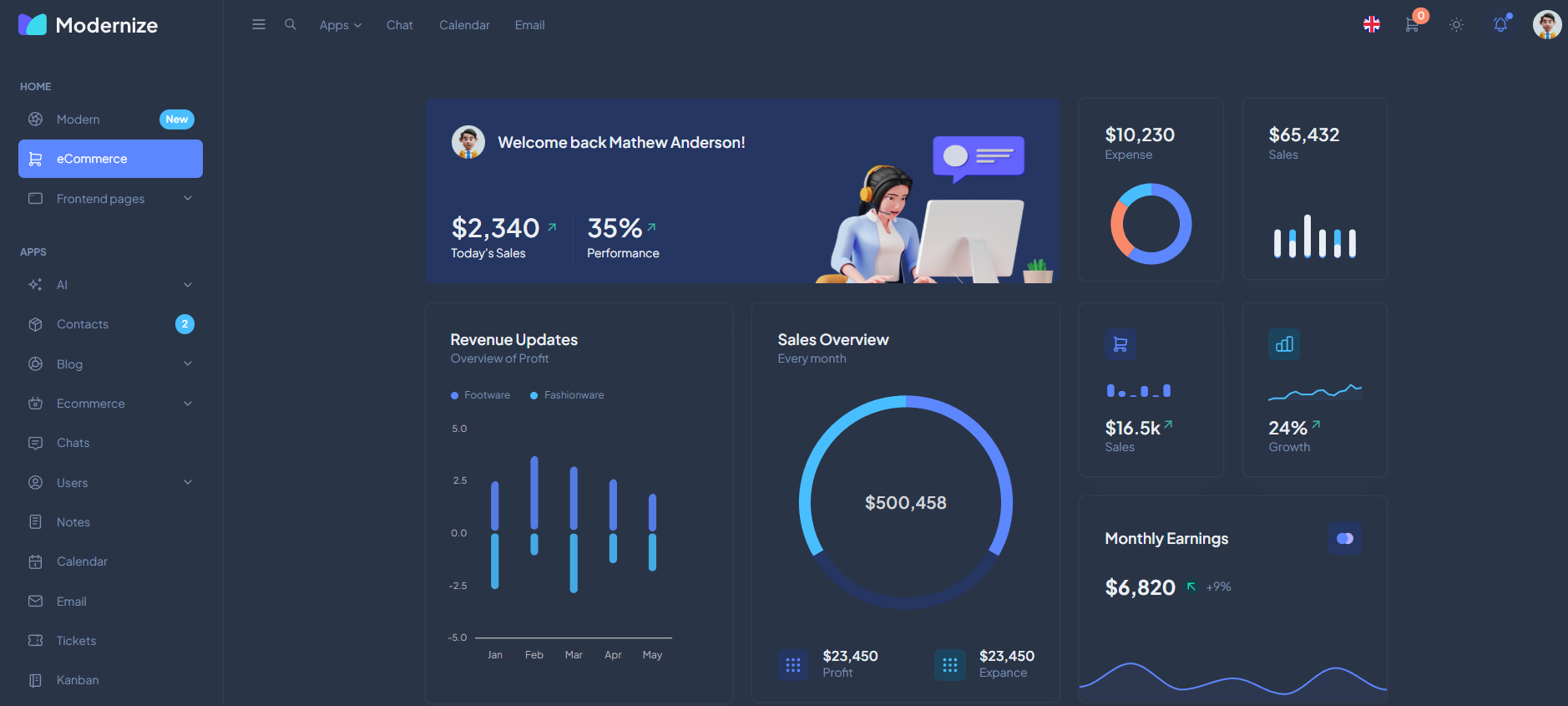
Material UI is one of the most popular React UI frameworks. Based on Google's Material Design, it provides a comprehensive set of customizable components, making it easy to build clean and responsive user interfaces. It provides ready-to-use components. It has many more components that shadcn/ui with multiple variants. But I see many people moving from Material UI to Shadcn/ui due to modern look and simplicity. At my work, we have started using Shadcn/ui over Material UI for new components.
Pros
- Huge Component Library: It provides a large number of components that includes pagintion, stepper, speed dial, and others.
- Strong Community & ecosystem: Material UI is used by a large number of products and users. Making the community large enough that you could easily find an answer if you stumble upon an error.
- Theming system: You can centrally customize colors, typography, spacing, and component styles across the entire app through a single theme configuration.
Cons
- Complex Customization: Whenever I have to deal with Material UI, I'm just not able to deal with its customization. It has options for customization for components, but it feels very complex with a lot of props passing.
- Styling system not as modern as Tailwind: With Tailwind CSS, it is easy to maintain the styling in a
global.cssfile. Also, Material UI does not look as modern as shadcn/ui.
Material UI should be used for SaaS apps, dashboards, or large-scale production apps where stability matters more than flexibility. Material UI is mature and has already been used by numerous dashboards for stability and performance.
Chakra UI
Accessible React components for building high-quality web apps and design systems. Works with Next.js RSC
Github Stars: ~40K
Bundle Size: ~1MB
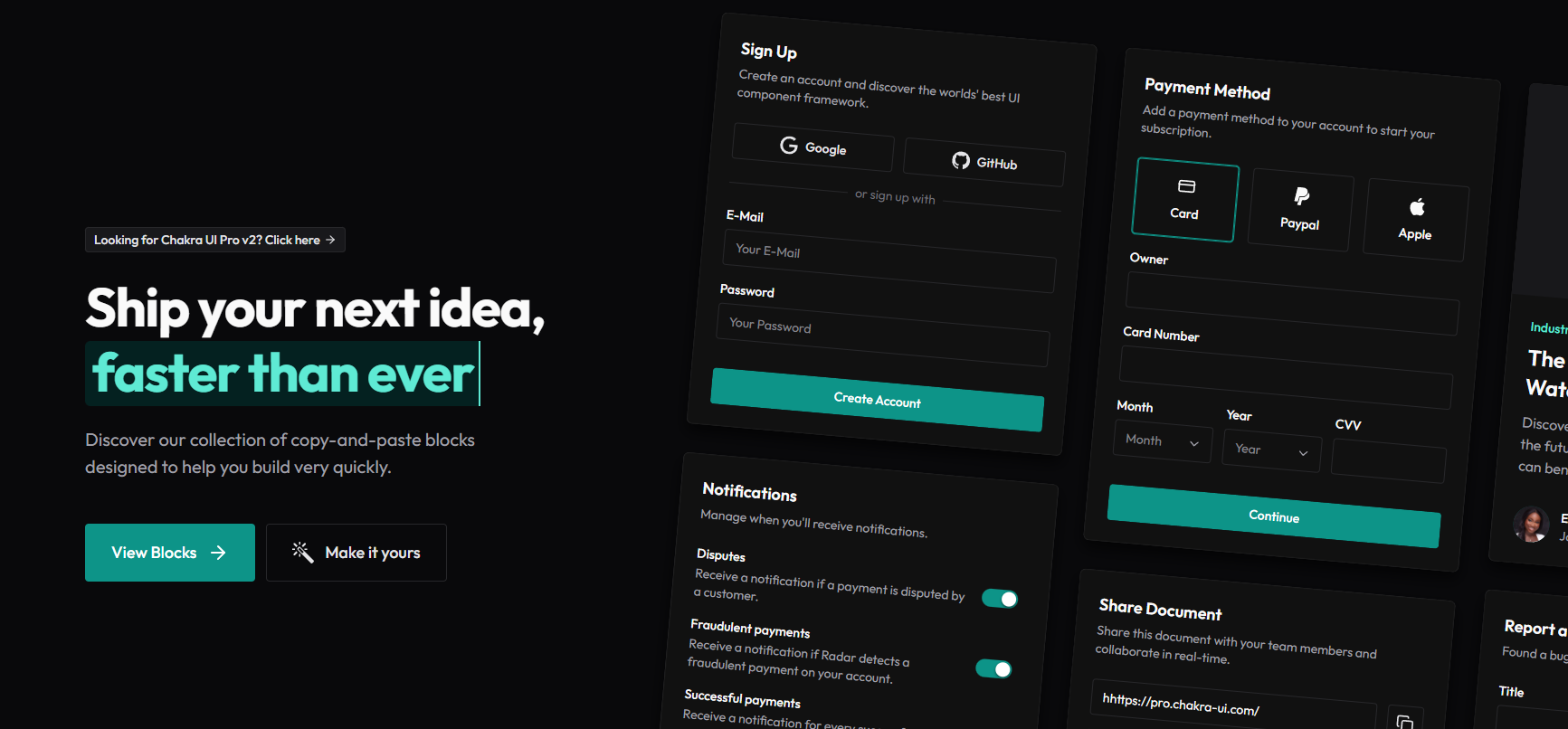
There was a time when my go-to library was Chakra UI. I made my first portfolio website using it. I won't say it has lost its charm, but it has different use cases as of now. The components are easy to use and customize as per your design system. It has components such as TreeView, Timeline, Steps, Stack, and others that can be helpful in specific use cases.
Pros
- Simple and Clean: It is quite easy to use with customization. It has a very clean design too.
- Developer Experience: If you use React Server Component, then Chakra UI supports it. Docs are also easy to follow with all the props and customization guide.
- Accessibility: The core principle of Chakra is Accessibility. Each component is built with accessibility in mind. You won't need to work on it.
Cons
- Limited Advance Components: It offers a few complex, ready-made components such as data tables.
- Less Powerful than MUI: It lacks the depth needed for highly complex, enterprise-scale applications due to missing features such as sorting, filtering, and advanced charts.
It is best for startups, building MVPs, and rapid development.
Ant Design
AI friendly design system that combines beauty and intelligence, making work full of inspiration and joy.
Github Stars: ~98K
Bundle Size: ~1.4MB
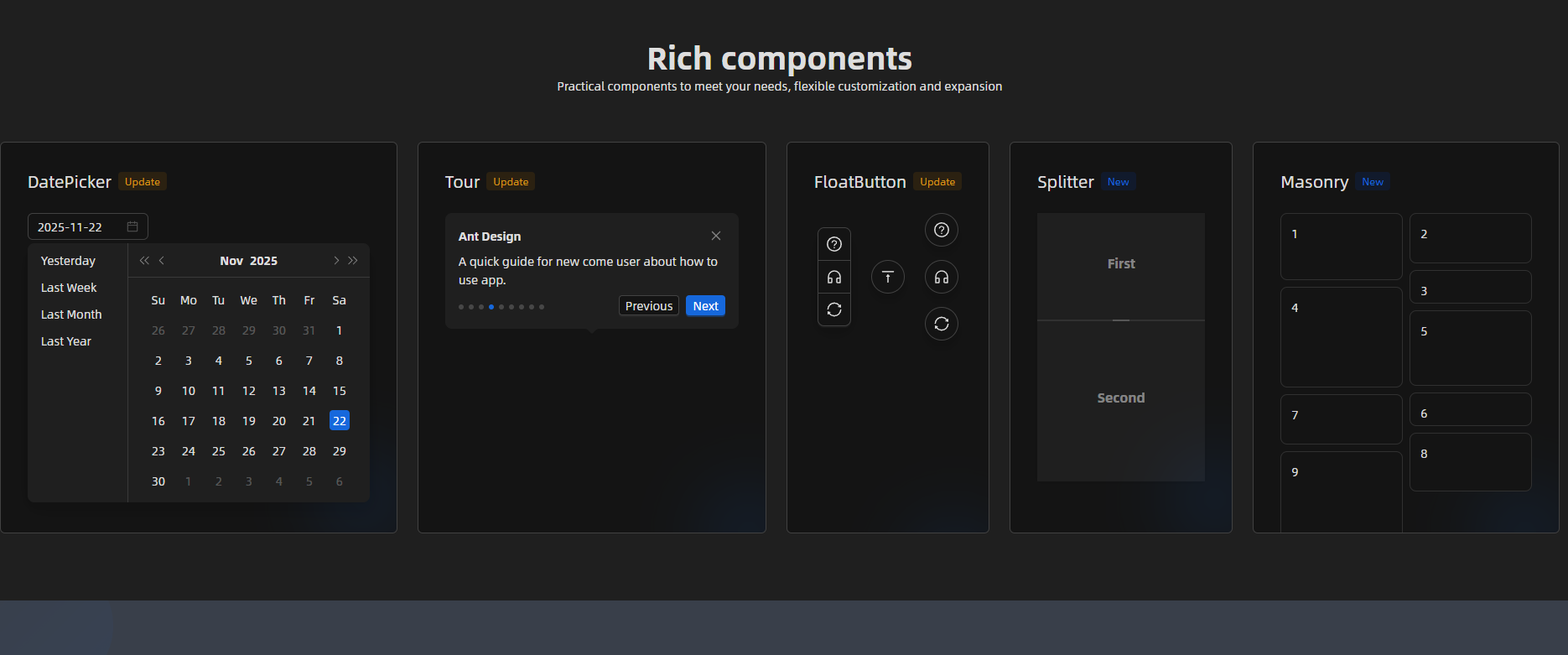
I have least used Ant Design as I didn't get any opportunity to use it at scale. I have only used it for testing the library and one version of my portfolio website. In this experience, what stands out is that it has quite a variety of components. It has components such as Results, Popconfirm(a variant of the alert dialog), Timeline, QR Code, and others. It also has good docs showing all the props and values to be passed for each component.
Pros
- Data-Heavy UIs: It is built for applications that handle large amounts of data. Especially with a virtual table, you can save performance while rendering large amounts of data in a table.
- Excellent tables, forms, dashboards: It provides advanced and feature-rich components like tables with sorting/filtering and complex forms.
- Enterprise-grade design system: The core principle of Ant Design is making components that is suitable for large-scale business applications.
Cons
- Heavy Bundle Size: As you see, it has the highest bundle size of 1.4MB. It is due to many components and dependencies. It can increase the bundle size if not optimized.
- Less Modern: Its default design feels more traditional and less aligned with modern minimal UI.
Mantine
Build fully functional accessible web applications faster than ever – Mantine includes more than 120 customizable components and 70 hooks to cover you in any situation
Github Stars: ~30K
Bundle Size: ~391KB
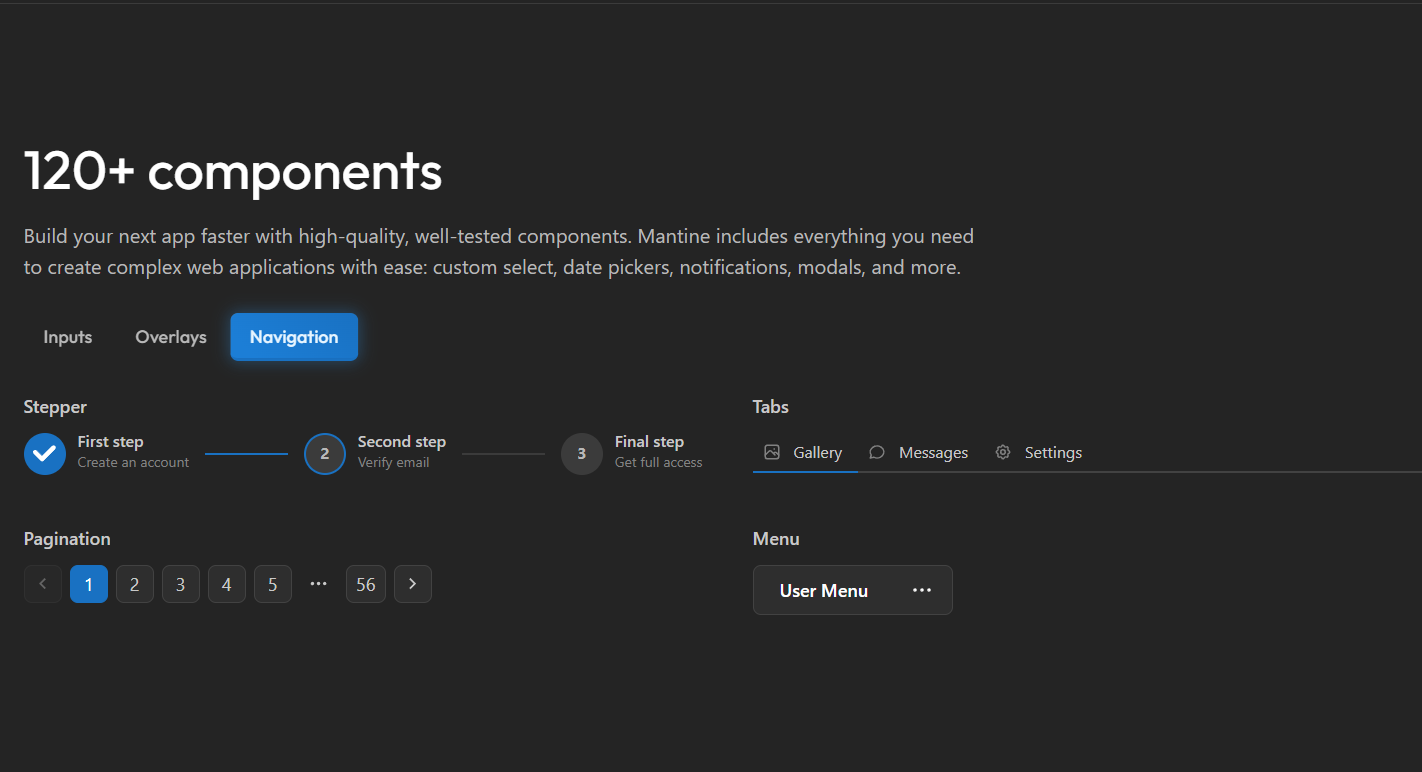
Bonus library with Mantine. It was one of the recommended frameworks in the previous version of this article. It offers a strong balance between power, flexibility, and developer experience. It also has 120+ components such as customer select, date picker, notifications, modals, and more.
Pros
- Rich set of hooks: Along with the component, it also has a large collection of useful React hooks.
- Customization: You have full control over styling and theming.
- Underrated but powerful → Despite being less popular, it offers features comparable to larger libraries like MUI.
Cons
- Smaller community: It has low industry adoption as of now, and a smaller community. It has fewer resources and forums that can help in case of any error.
It is still best suited for UI that wants a balance between flexibility and a ready-made component.
Frequently Asked Questions
Which React UI library is best for beginners?
Chakra UI is the best choice for beginners who want a framework. Use shadcn/ui if you know Tailwind CSS.
Which UI library has the smallest bundle size?
Shadcn/ui has the smallest bundle size, around 100kb, because you will use the component that you require.
Is Tailwind CSS better than UI frameworks like MUI or Chakra UI?
TailwindCSS is not a UI library but a utility-first CSS library. It is best suited to work with shadcn/ui.
Which React UI library is best for dashboards?
Ant design is preferred for the dashboard due to its advanced tables, forms, and data-heavy components.
Should I use a UI library or build my own components?
If you want speed and consistency, use a UI library; if you need full design control and uniqueness, consider building your own components or using tools like shadcn/ui.
Conclusion
There’s no single “best” React UI library — the right choice depends on what you’re building and how much control you need. If you want a complete, production-ready system, libraries like Material UI and Ant Design are still solid, battle-tested choices. If your focus is speed and developer experience, Chakra UI makes it easy to ship quickly. And if you prefer full control with modern design, shadcn/ui is becoming the go-to approach for many developers today.
At the end of the day, the best approach is simple —pick the tool that helps you ship faster without limiting your future flexibility.